Common Surfing Mistakes We See at Our Surf Camp (And How to Fix Them)
Every week in Playa Venao, surfers arrive with different backgrounds and goals. Some are catching their first waves. Others have been surfing for years but feel like they’ve stalled out. No matter their skill level, there are usually a few consistent underlying issues that stand out. It’s rarely about bravery or athleticism. More often, it comes down to a few small mechanics that get repeated session after session without correction. Here are the most common mistakes we see beginner and intermediate surfers make, along with how to avoid them.
You’re Not Centered on the Board
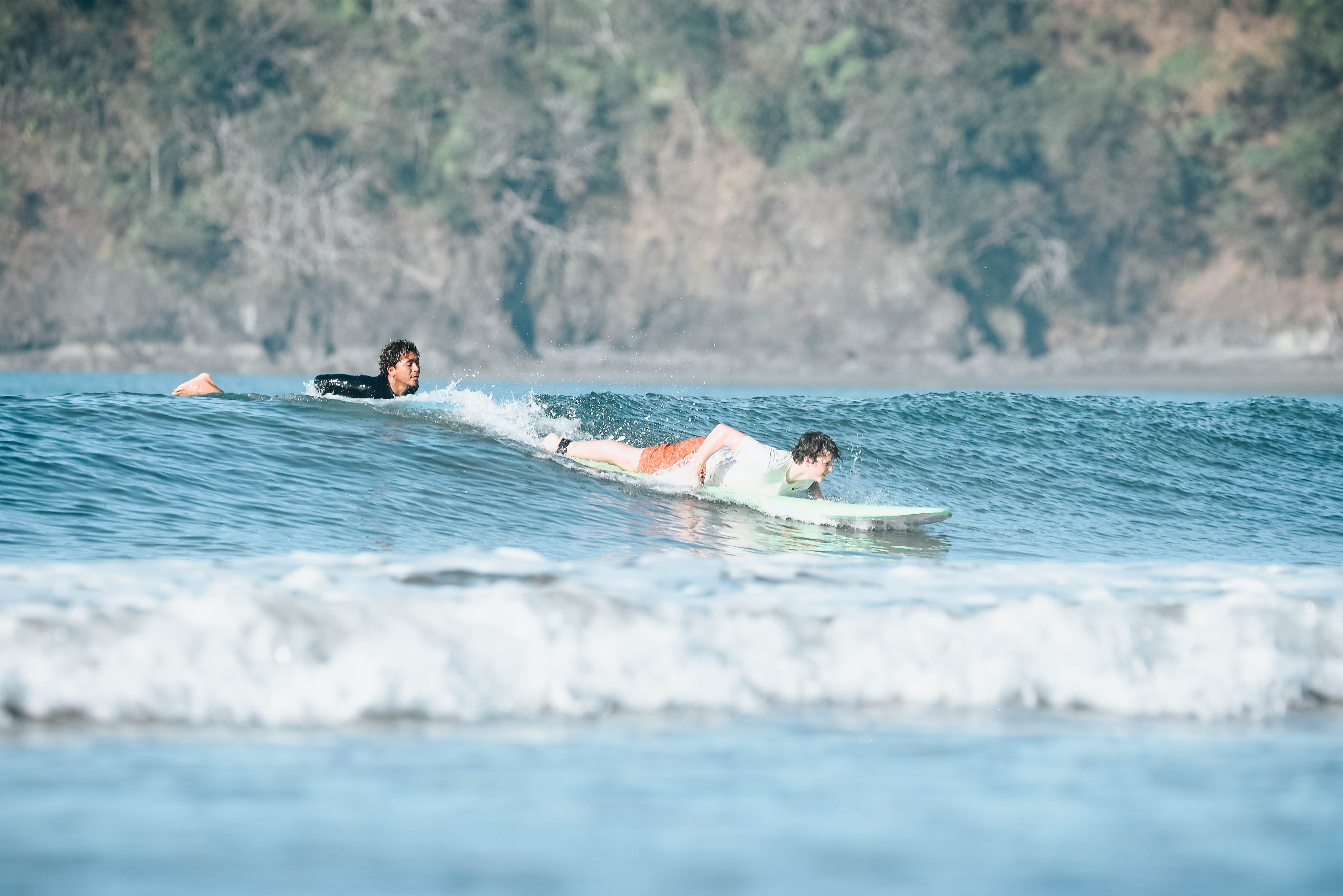
Before you ever think about standing up, your paddling position determines whether the wave will even let you in. A surprising number of surfers lie too far forward or too far back without realizing it. Too far forward, and the nose wants to dive the moment the wave lifts you. Too far back and the wave rolls underneath, leaving you behind.
In Playa Venao, where certain tides produce softer, rolling entries, proper paddling is especially important. The board should glide flat across the surface, not push water or drag tail. When your weight is centered, and the board feels neutral beneath you, wave entry becomes noticeably easier. It’s not dramatic, but it changes your consistency almost immediately.
You’re Hesitating in the Paddle

Another pattern we see constantly is hesitation right at the critical moment. Surfers paddle with decent effort, feel the wave begin to lift the tail, and then ease off just when they should be committing. That half-second pause is often the difference between getting in early and watching the wave pass by.
Beach breaks reward momentum. You have to match the speed of the wave before it stands up beneath you. That means paddling with intent and continuing through the lift rather than waiting to see what happens. Surfers who commit fully tend to enter the wave earlier and more smoothly. Surfers who hesitate often end up taking off late and feeling rushed.
Your Pop-Up Is Slowing You Down
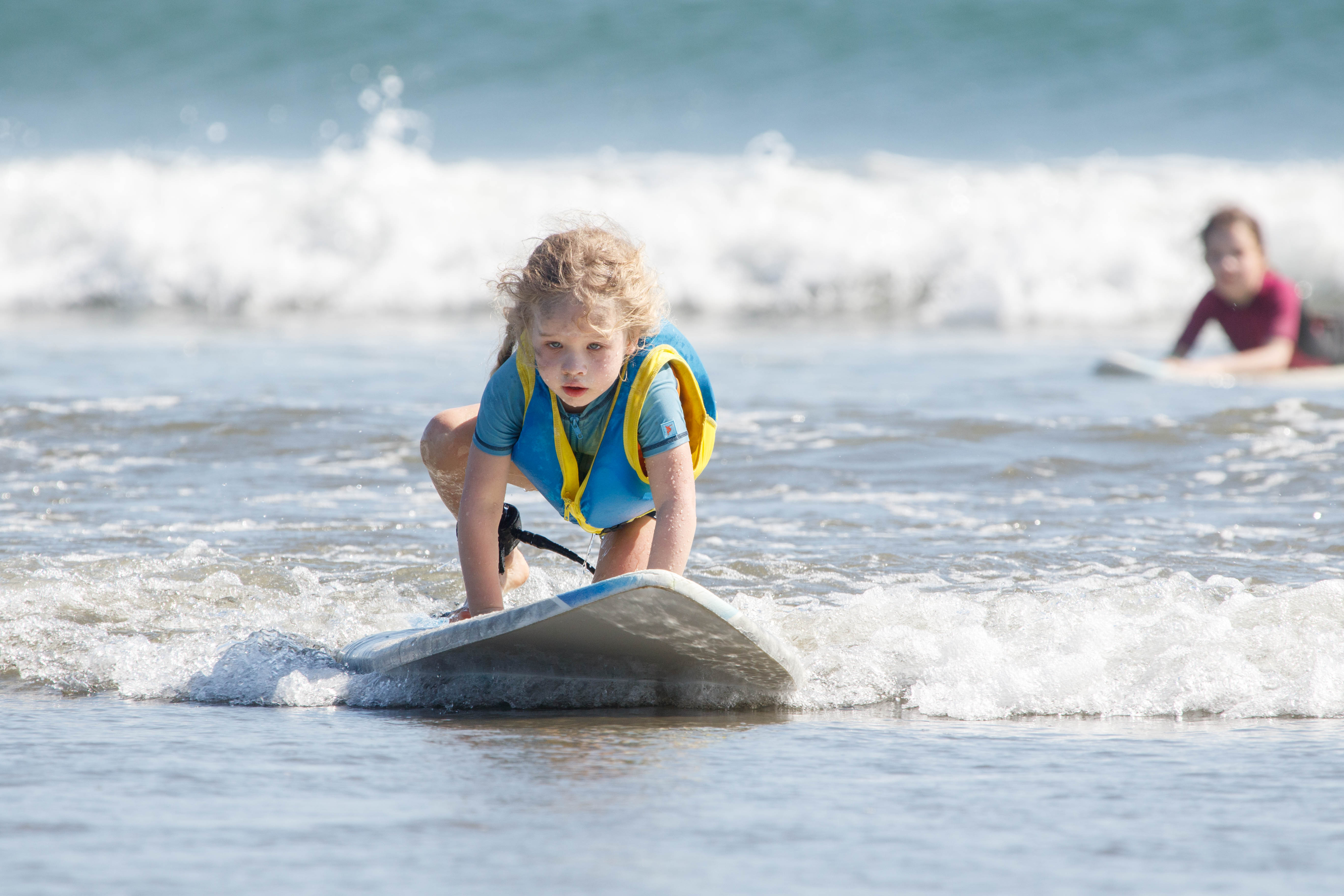
The takeoff sets the tone for the entire ride. If it’s rushed or uneven, everything that follows feels unstable. We frequently see surfers bring a knee up first, grab the rails for leverage, or pause halfway through the movement because they’re unsure of their footing. Those habits shift weight off-center and create imbalance before the ride has even begun.
A clean pop-up is direct and controlled. Hands under your chest, even pressure through both arms, back foot landing first, front foot stepping cleanly underneath you in one motion. When that movement becomes automatic, the first few seconds of the ride feel calmer. And those first few seconds usually determine how much of the wave you’ll actually use.
You’re Riding the Wrong Board for the Conditions

Board choice has an enormous impact on progression. We often see surfers trying to push themselves on boards that don’t match either their level or the conditions. Too little volume makes catching waves unnecessarily difficult and forces late takeoffs.
Playa Venao changes day to day. Some mornings are softer and forgiving. Other tides introduce steeper sections and faster drops. The board should reflect both the wave and the surfer. When equipment is aligned with your skill and the conditions, you’ll have an easier time catching waves.
You’re Not Looking Where You Want to Go
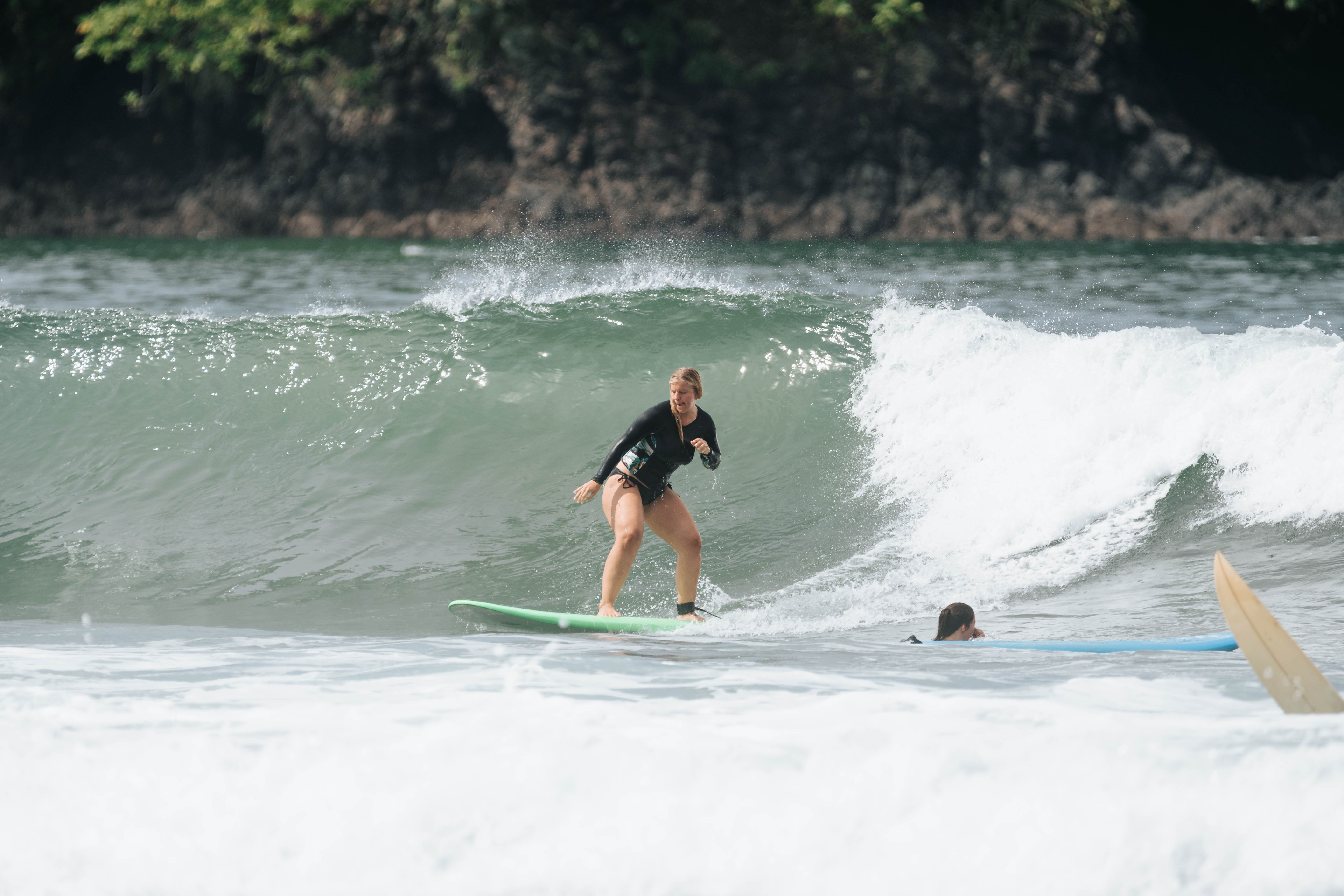
After standing up, many surfers instinctively look toward the beach or down at their feet. It’s natural, especially for new surfers struggling to balance. But surfing follows your line of sight. Your head turns first, your shoulders follow, then your hips, and finally the board.
If your gaze stays fixed on the shoreline, the ride tends to flatten out. The moment you pop up, your attention should already be down the line, scanning the open face of the wave. When your eyes move first, your body organizes around that direction. Rides lengthen not because the wave changed, but because your focus did.
In Playa Venao, the opportunity to progress is always there. The waves here offer repetition and consistency, ideal for learning. If you’re ready to take your surfing to the next level, book a trip to Playa Venao.

.jpg)


