Summer Surf Travel Tips: What to Pack, How to Plan, and Where to Stay
Summer is south swell season, which means for many, it’s surf trip season. Long-period energy starts lighting up coastlines across Central America and beyond, where the water is warm and the surf consistent. It’s also when everything gets busier. Flights fill up, lineups get crowded, and the difference between a dialed trip and a frustrating one usually comes down to preparation. If you get a few key things right—what you pack, what you ride, and where you stay—you set yourself up to surf more and stress less.
Start With the Conditions, Not the Destination

It’s easy to pick a place first and figure the rest out later. But your trip will be better if you start with the waves. South swell season typically means consistent, chest- to overhead surf in a lot of warm-water destinations. Think about what you actually want to surf. If you’re newer, look for regions known for softer beach breaks and forgiving setups. If you’re more experienced, you can start targeting waves with more shape and push. You don’t need to forecast specific swell charts months out, but you should understand the general conditions you’re signing up for. That decision influences everything else. If you’ve got a mixed group, it’s crucial to find a destination with a wave for every skill level. At Playa Venao, our crescent-shaped beach offers sheltered beginner waves on the sides of the cove, while the main peak boasts steep takeoffs and rippable walls.
Pack Like You’re Going to Surf Every Day

Because you probably are.
Keep your packing focused and functional:
• 2–3 pairs of boardshorts or swimsuits
• A lightweight rash guard or sun shirt
• Reef-safe sunscreen (bring extra)
• Hat and sunglasses for downtime
Surf-specific gear matters more:

• Extra leash
• Backup fins
• Small ding repair kit
• Basic first aid (cuts happen, especially around reefs or crowded sandbars)
You don’t need a massive bag. You need gear you trust and will actually use. Most of your trip is spent in the water anyway.
Board Choice: Be Realistic, Not Aspirational

You don’t need a full quiver. You need boards that match the conditions and your ability.
A simple, effective setup:
• A daily driver (shortboard or midlength) that works in average conditions
• A fish or groveler for smaller or softer days
If the destination is known for heavier surf, you can bring a step-up—but only if you’re comfortable riding it. There’s no upside to bringing a board you can’t paddle into waves with.
The goal is more waves, not more boards.
Travel Smart With Your Boards

Boards take a beating in transit. Plan for that.
Use a quality travel bag with real padding. Pack your boards with intention:
• Remove fins and pack them separately.
• Use pool noodles, pipe insulators, towels, or clothes to reinforce the rails and the nose/tail.
• Distribute weight evenly to stay within airline limits.
Assume something might get dinged. That’s part of surf travel. Having a repair kit keeps you in the water instead of hunting down a fix in a new place.
Choose Accommodation That Makes Surfing Easy
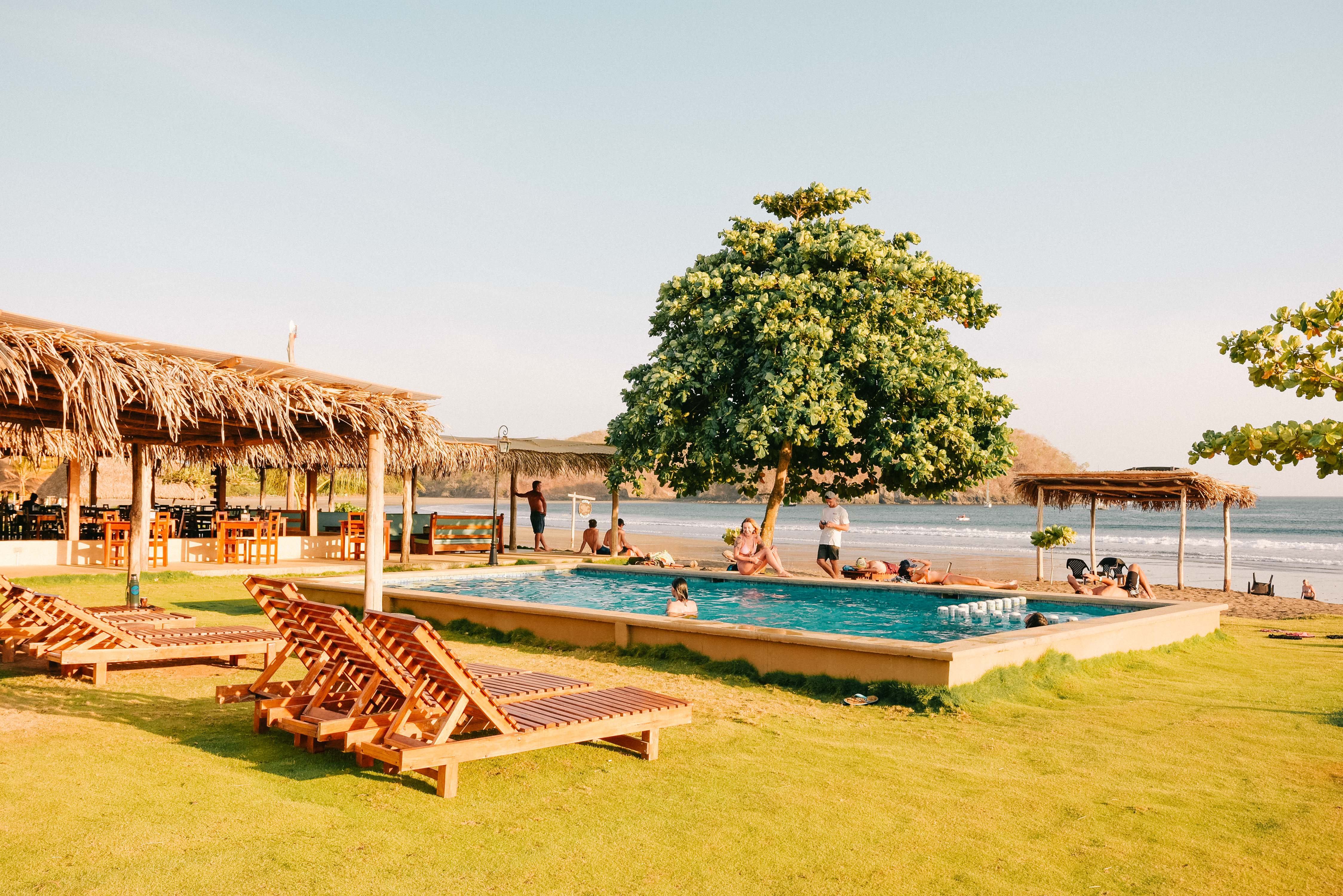
Where you stay can either streamline your trip or complicate it.
You want:
• Direct or easy beach access
• No reliance on long drives or tight schedules
• Flexibility to surf when conditions are best
This is why on-the-sand surf camps and all-inclusive setups work so well, especially in summer when swell is consistent.
At Beach Break Surf Camp, you’re right on the beach with everything handled. You’re not coordinating rides, checking multiple spots, or trying to time tides from across town. You wake up, look at the waves, and paddle out.
More importantly, you’re surfing with experienced instructors who know the break and can help new surfers with positioning, timing, and wave selection. Instead of guessing your way through sessions, you’re learning every time you paddle out. For beginners and intermediate surfers, a quality surf instructor can make or break the trip.
The best trips settle into a rhythm fast. Surf when it’s good, recover when it’s not, and keep everything else secondary. The downtime matters too. Having the right setup out of the water keeps you fresh and ready to go when the waves turn on. At a place like Beach Break, it’s easy to find balance. You can roll straight from a morning session into recovery without overthinking it—whether that’s a quick stretch, a proper meal, or just getting out of the sun for a bit.
And when the surf backs off, or you need a reset, having options on-site makes a difference. Jiu jitsu, yoga, gym sessions, breathwork, sound baths, waterfall hikes—those aren’t just extras, they keep you moving without burning you out. You stay active, recover properly, and show up sharper for the next session. Book your stay at Beach Break Surf Camp in Playa Venao, Panama, to make the most of your next surf trip.


