Understanding Wave Types for Beginner Surfers
If you’re just getting into surfing, one of the first things you’ll notice is that not all waves are created equal. The way a wave breaks—where it breaks, how it stands up, and how predictable it feels—comes down to what’s underneath the water. Sand, rock, reef, or a long stretch of coastline all shape the wave differently. Understanding these differences is one of the fastest ways to improve. It helps you choose the right spots, read conditions more confidently, and avoid getting in over your head. Whether you’re paddling out at a mellow beach break or watching lines wrap down a point, here’s how to make sense of the main wave types and everything in between.
Beach Breaks: Shifting, Forgiving, and Ideal for Learning

Beach breaks are where most surfers start, and for good reason. These waves break over sandbars, which means the bottom is constantly shifting. One day, the sand might be stacked perfectly, creating clean, peeling waves. The next, it’s scattered, and the lineup feels all over the place.
Places like Playa Venao are classic examples. You’ll typically find multiple peaks spread across the beach, giving beginners space to spread out and avoid the pressure of a tight lineup. What makes beach breaks beginner-friendly is the softer landing. Wiping out over sand is a lot more forgiving than over rock or reef. That said, they can also be unpredictable. Peaks shift, currents move, and the “best spot” isn’t always obvious right away.
Wind and tide matter here more than you might expect. Offshore winds help clean things up, while onshore winds can turn an otherwise fun session into a mess. Mid to high tide often smooths out the sandbars, while low tide can make waves steeper and faster, sometimes closing out entirely.
Point Breaks: Consistent, Clean, and Long Rides

Point breaks are the waves you picture when you think of long, perfect rides. These waves wrap around a headland or point of land, breaking in a predictable direction along the coastline. Santa Catalina is the best example we have nearby in Panama. When it’s on, you get long, drawn-out rides with a clear takeoff zone and a defined line down the wave. What sets point breaks apart is consistency. Because the bottom contours don’t change much, the wave tends to break in the same spot, in the same way, over and over again. That makes them easier to read once you understand the lineup.
But that consistency comes with a tradeoff. Everyone else wants that same wave. Crowds tend to stack up at the takeoff zone, and positioning becomes more important than at a beach break. Tide and swell direction are critical here. Many point breaks need a specific swell angle to start working. Too straight, and the wave might miss the point entirely. Too much tide, and the wave can fatten out. When it all lines up—right swell angle, light offshore wind, and the right tide—you get those long, flowing rides that define surf trips.
Reef Breaks: Powerful, Precise, and Less Forgiving
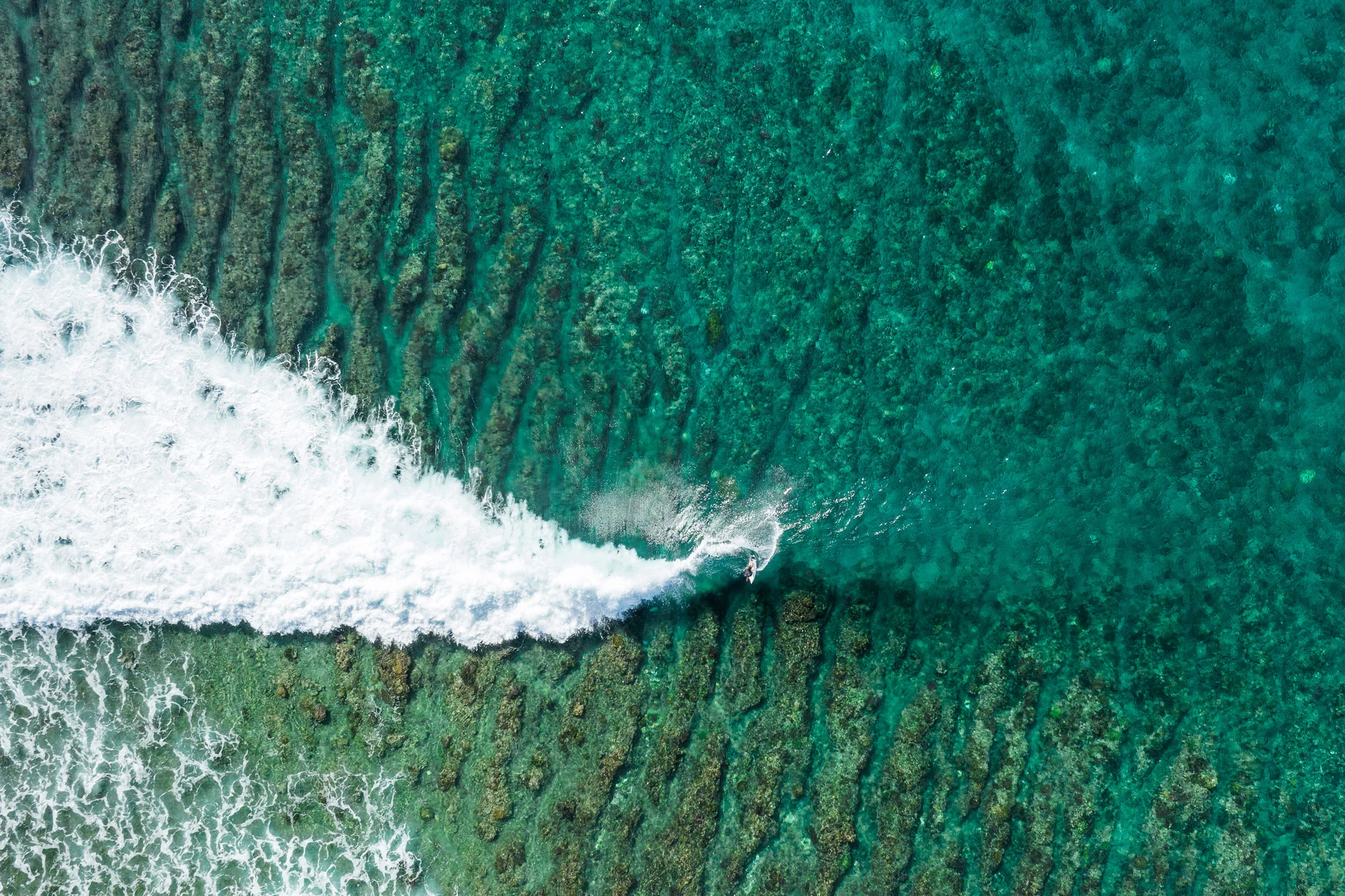
Reef breaks form over rock or coral seafloor. They can be powerful and more defined compared to beach breaks. In places like Bocas del Toro, reef setups create some of the most mechanical waves in the region. The shape of the reef dictates exactly how the wave breaks, which can mean clean barrels or perfectly shaped walls—but also very little margin for error.
The biggest difference for beginners is the consequence. Falling on a reef isn’t like falling on sand. Timing, positioning, and awareness matter more here, even on smaller days.
That said, not all reef breaks are heavy. Some are surprisingly mellow, especially at higher tides when there’s more water covering the reef. Tide plays a huge role—low tide can expose shallow sections and make waves faster and more critical, while higher tide can slow things down and make them more approachable.
Wind still follows the same rules: offshore is your friend, onshore is not. But because reef waves are more structured, they can sometimes hold their shape better in less-than-perfect wind.
Everything in Between: Rivermouths, Reefs with Sand, and Hybrid Setups
Not every wave fits neatly into one category. Some of the best waves in the world are hybrids—part beach break, part reef, or influenced by river currents and shifting sand.
Rivermouths are a good example. Sand builds up where a river meets the ocean, creating sandbars that can act more like a point break when conditions align. These setups can produce long, peeling waves but still shift over time like a beach break. You’ll also find reef breaks with sand covering parts of the bottom, softening the impact and changing how the wave breaks depending on the season.
The goal is to understand what you’re paddling into.A beach break might give you more room to learn and make mistakes. A point break might help you work on longer rides and positioning. A reef break might push you to be more precise and aware.
Matching your ability to the type of wave—and the conditions that day—is what keeps surfing fun and progression steady. It’s the difference between feeling out of place in the lineup and feeling like you’re in the right spot at the right time. When you start traveling, this becomes even more important. A well-rounded understanding of wave types helps you choose the right boards, the right spots, and the right days to paddle out. As with any surf trip, being prepared for a range of conditions is key. Spend time watching before you paddle out. Pay attention to how the wave breaks, not just how it looks from the beach. The more you understand what’s happening under the surface, the faster everything else starts to click.