Surf Breaks 101: Understanding Beach Breaks, Reef Breaks, and Point Breaks
If you’ve traveled to surf, you’ve heard terms like beach, reef, or point break. These describe how the ocean floor shapes the wave. The break type affects wave power, shape, consistency, and how tides, swell, and wind influence conditions. Knowing these differences helps you read the ocean and choose spots for your surf trip. Here’s a closer look at the three main surf breaks and how conditions affect each.
Beach Breaks
.jpg)
Beach breaks are waves breaking over sandbars by a sandy shoreline. Sand shifts with currents, tides, and storms, so beach breaks constantly change. A sandbar that makes good waves one week might move or vanish the next. This variability makes beach breaks exciting. Instead of a fixed takeoff spot, multiple peaks form along the beach, spreading surfers out and offering options for different skill levels.
Because the ocean floor is made of sand rather than rock or reef, beach breaks tend to respond well to a wide range of swell directions. Incoming swell interacts with the shifting sandbars to form peaks that can break both left and right, depending on the swell angle. Larger swells can also reorganize sandbars, sometimes improving the waves and sometimes flattening them out. Tide plays a key role at beach breaks. Many work best mid tide, when enough water covers sandbars for shaped, powerful waves. Offshore winds groom faces, while onshore winds scatter peaks.
Reef Breaks

Reef breaks occur when waves break over rock or coral formations beneath the surface. Because the bottom structure is fixed, reef breaks tend to produce waves in the same location with a more predictable shape than beach breaks. The contours of the reef often focus incoming swell energy into well-defined peaks or takeoff zones. When the swell direction and size line up, reef breaks can produce extremely clean, powerful waves with long, peeling sections.
Reef breaks are often more sensitive to swell direction and tide than beach breaks. Many reefs only work when swell approaches from a specific angle that allows the wave to wrap across the reef and peel down the line. At very low tide, the reef may be too shallow, while a bit more water can help the wave stand up and peel more smoothly. Wind is key, too. Offshore winds hold wave faces open for clean conditions, while onshore winds quickly roughen the surface and make reef breaks more challenging.
Point Breaks
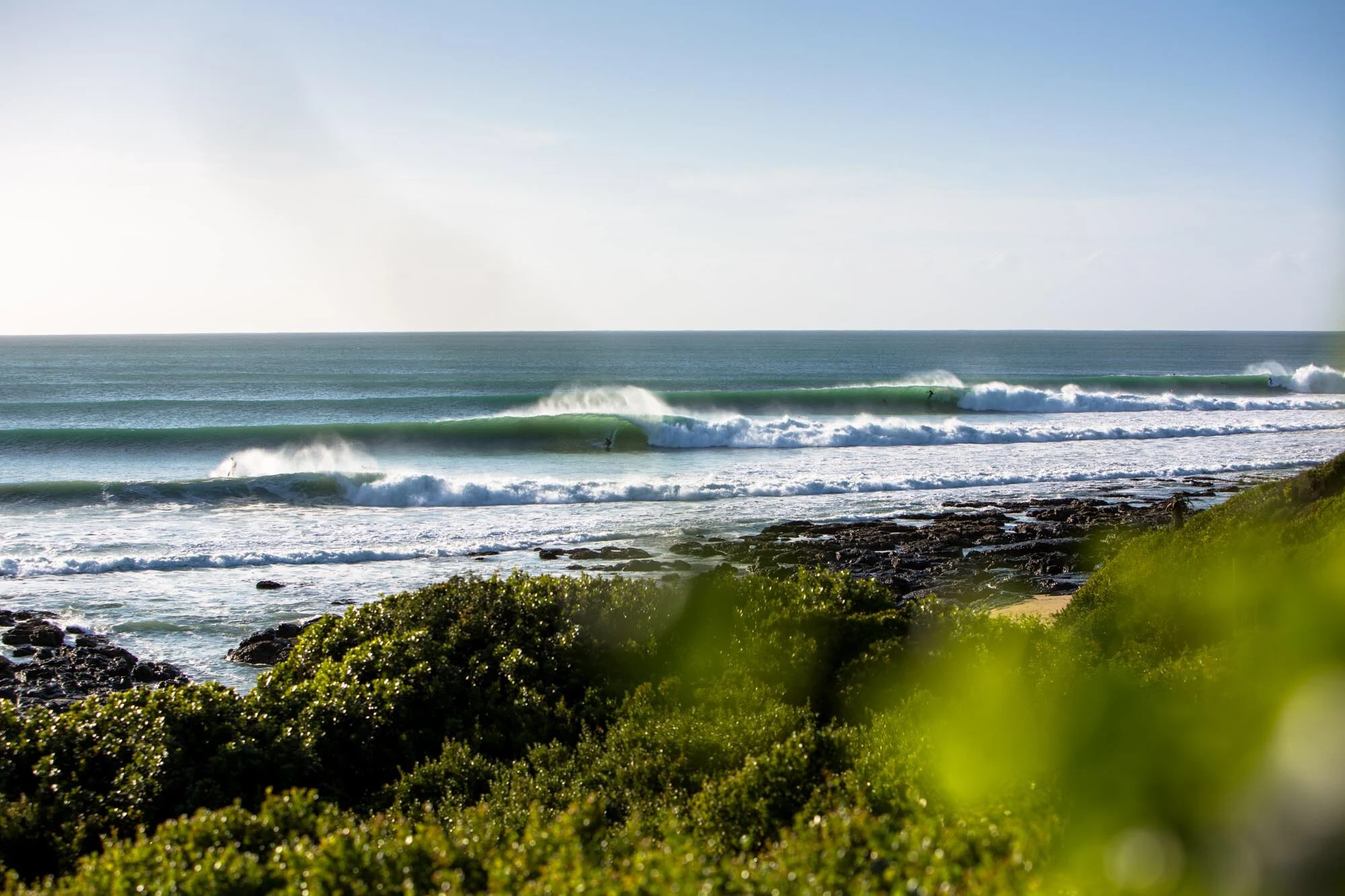
Point breaks form when waves wrap around a headland or point of land and begin to peel along the shoreline rather than breaking straight onto the beach. As swell energy bends around the point, the wave lines up along the coastline, creating long, flowing rides. Some of the most famous waves in the world are point breaks because they can produce long, consistent walls that allow surfers to link multiple turns on a single wave.
Swell direction is especially important at point breaks. The wave typically needs to approach at the right angle so the swell can wrap around the point and peel down the line. If the swell comes in too straight or from the wrong direction, the wave may close out or break inconsistently. Tide can affect wave speed and steepness at point breaks: low tide often means steeper waves, while high tide softens them. Wind also influences conditions, and some points get natural protection based on orientation. Read Different Breaks
Every type of surf break offers a different experience. Learning how tide, swell size, swell direction, and wind interact with each type of break is one of the most valuable skills a surfer can develop. Once you understand how these factors work together, it becomes much easier to predict when a particular spot will be working. In places like Playa Venao, where a high-quality beach break offers multiple peaks across the bay—from softer waves on the edges of the cove to more powerful peaks near the river mouth—that knowledge helps you paddle out at the right time to make the most of your session.


