Playa Venao vs. Bocas del Toro: Choosing the Right Surf Destination for Your Skill Level
Panama offers two very distinct surf experiences, and choosing between them comes down to one thing: what kind of surfer you are right now, and what kind of surfer you want to become. Playa Venao and Bocas del Toro are often mentioned in the same breath, but they serve entirely different purposes. One is built for progression, consistency, and long-term development. The other is a technical, reef-heavy playground that rewards experience and confidence. Neither is better. But for most surfers, one will make you better faster, and the other can easily hold you back if you arrive too early.
Bocas del Toro: A Reefy Haven for Advanced Surfers
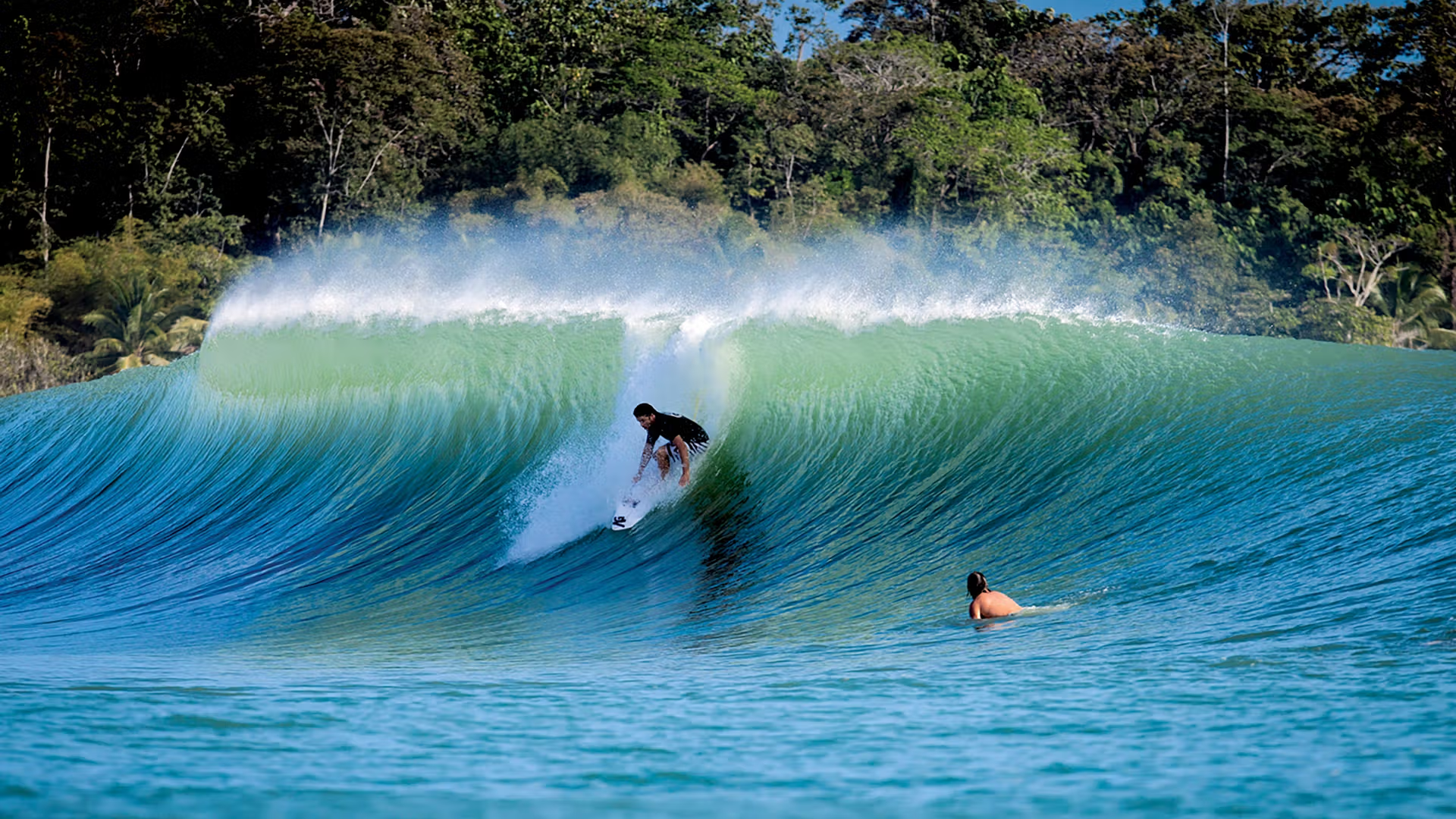
Bocas del Toro is raw, powerful, and unforgiving in the best and worst ways. It’s a dream destination for experienced surfers who already know how to handle themselves in serious conditions. The waves here break over shallow coral reefs, often with fast takeoffs, hollow sections, and limited room for error. Timing matters. Positioning matters. Falling correctly matters. This is not a place to “figure it out as you go.”
For advanced surfers, that’s the appeal.
Bocas rewards precision and confidence. If you’re comfortable with late drops, navigating tight takeoff zones, and managing wipeouts over reef, the waves can be exceptional. You’ll find punchy peaks, heavy barrels, and the kind of waves that belong on magazine spreads.
The downside is consistency and accessibility. Swell windows can be narrow, conditions change quickly, and many breaks require boat access. Add in currents, reef hazards, and crowds at the better-known spots, and Bocas becomes a destination that demands more than it gives.
Playa Venao: Built for Progression at Every Level
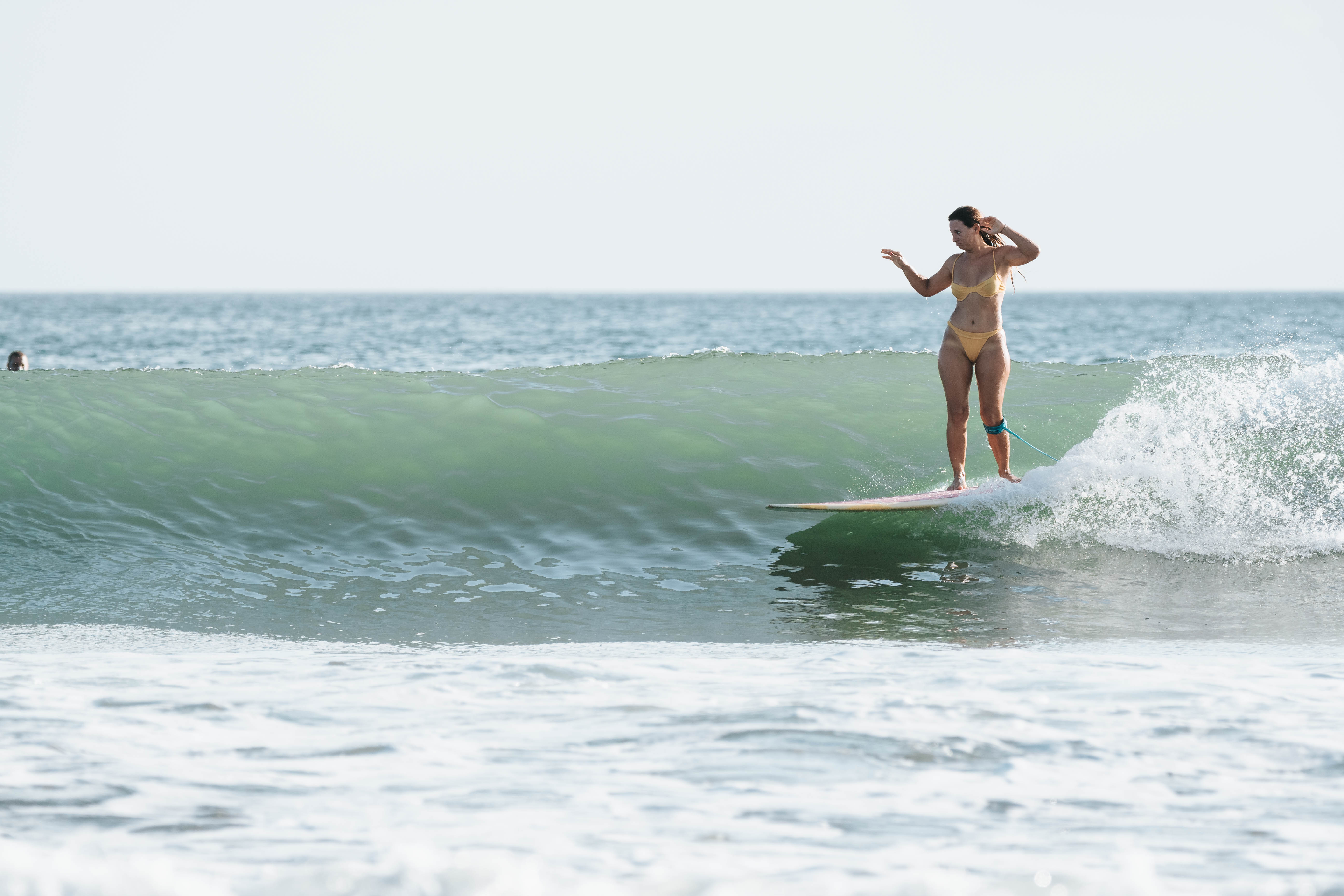
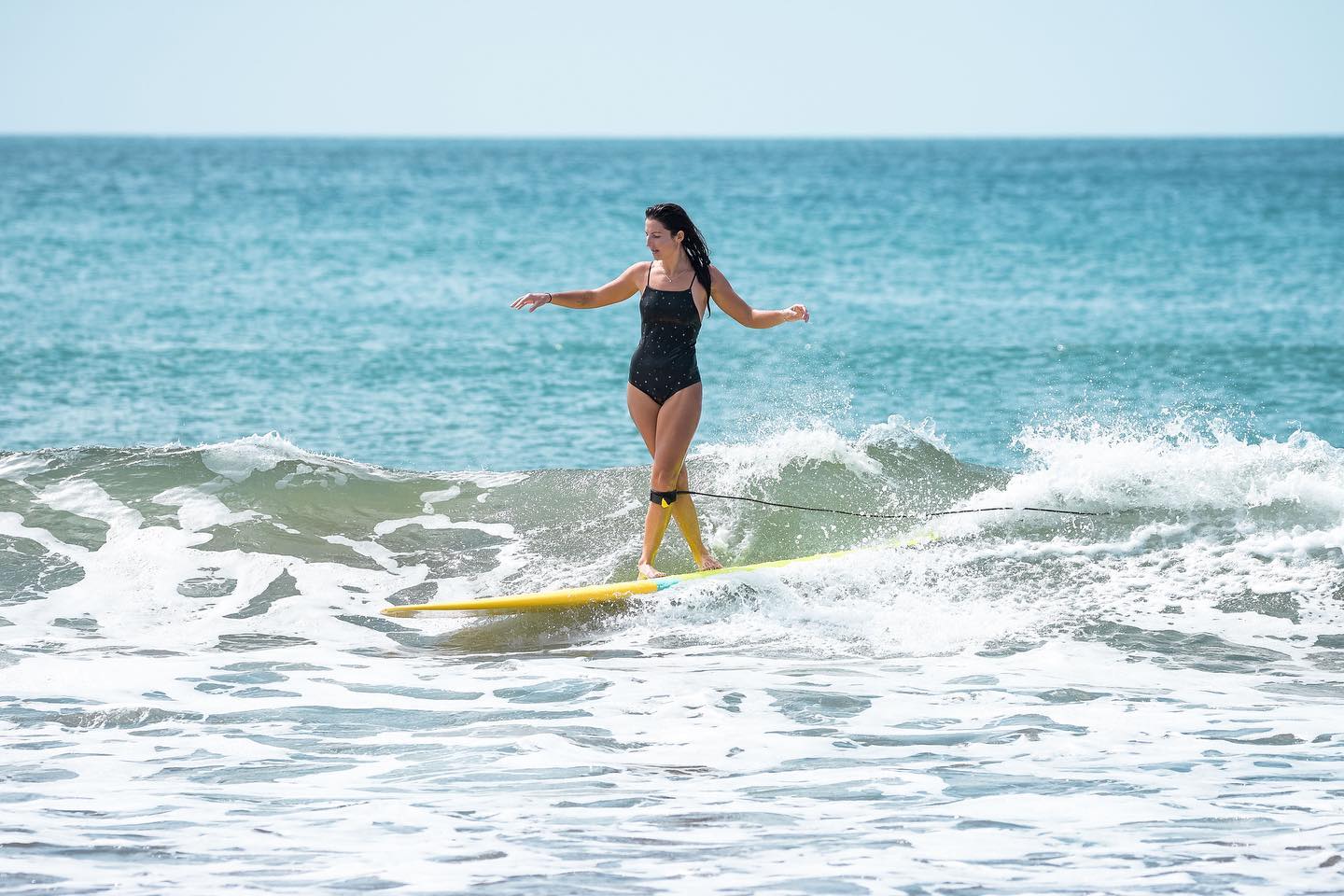
Playa Venao sits on the opposite end of the spectrum (and country), and that’s exactly why it’s such a powerful learning environment. The beach break offers a wide variety of peaks, forgiving sand bottom, and consistent, year-round swell. Conditions change throughout the day and across tides, creating endless opportunities to practice reading the ocean rather than surviving it.
This is where surfers actually learn how to surf. Beginners benefit from approachable whitewater and mellow inside reforms. Intermediates have room to work on angled takeoffs, trimming, and turns without consequence-heavy mistakes. Advanced surfers still find punchy sections and clean lines, but with the freedom to experiment, fail, and refine.
What truly sets Playa Venao apart is repeatability. You can surf day after day, sometimes multiple sessions a day, without needing perfect conditions or boat logistics. That kind of volume is what drives real progression.
Reef vs. Sand: Why Bottom Type Matters More Than People Think

The biggest difference between Bocas and Playa Venao isn’t the vibe or scenery; it’s what happens when you fall.
Reefs demand commitment. You need to be confident going into waves because hesitation leads to mistakes, and mistakes over shallow coral have consequences. That reality creates a steep learning curve that only works if your fundamentals are already solid.
Sand-bottom waves facilitate natural learning. You can push your limits, try new maneuvers, misjudge sections, and recover. That freedom accelerates improvement far more than surfing waves you’re afraid to fall on.
Progression requires repetition, and repetition requires safety.
Lineups, Access, and Learning Environment
Bocas lineups tend to be concentrated. Fewer takeoff zones mean more competition and less margin for positioning errors. For advanced surfers, that’s manageable. For developing surfers, it often results in frustration or bad habits.
Playa Venao’s spread-out beach break offers space. You can find your own peak, adjust positioning, and focus on your surfing instead of fighting for waves. That environment supports thoughtful progression rather than reactive surfing.
Access matters too. When waves are right out front, you surf more. When they require boats, timing, and logistics, sessions become precious—and pressure creeps in.
Who Should Surf Where?
Bocas del Toro is ideal if you:
• Are already confident in reef breaks
• Have strong paddle fitness and positioning skills
• Want to test yourself in technical, hollow waves
• Are comfortable managing risk independently
Playa Venao is ideal if you:
• Are learning to surf
• Want to progress from beginner to intermediate (or beyond)
• Care about consistency and surf volume
• Want to build skills that transfer anywhere in the world
Why We Believe in Playa Venao for Progression
At our surf school in Playa Venao, we focus on developing independent surfers. That means teaching ocean reading, etiquette, and decision-making, not just popping you up for a photo.
The wave variety here allows students to learn how conditions change, how peaks shift, and how to adapt. Those skills don’t just apply to Playa Venao—they apply everywhere.
Bocas del Toro is a destination you grow into. Playa Venao is a destination that helps you grow.
If your goal is long-term progression, confidence, and the ability to surf a wide range of conditions safely, Playa Venao isn’t just the better choice—it’s the smarter one. Book your next Panama surf trip today.